Friday, 10 June 2022
Mental Health Benefits of Being Organized
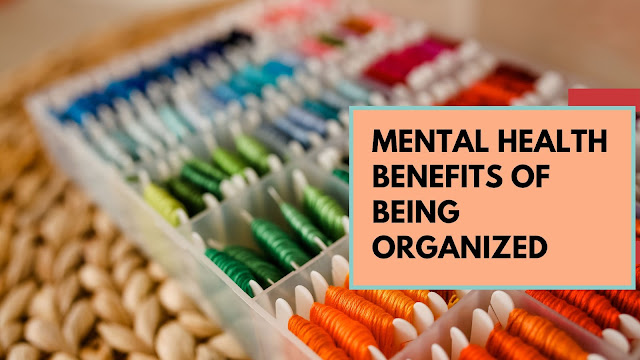

There are many mental health benefits of being organized.
Have you ever experienced any of these situations: running late for an appointment because you can't find a particular item in your messy room, missing meetings because you forgot, or even buying items you already have because your house is unorganized?
Staying organized can affect the quality of your life. A research study done in 2010 found that women who described their living space as disorganized had higher levels of cortisol the stress hormone. They had higher depressed moods during the day while women with more organized spaces had elevated moods. Some studies have even shown an association between how much clutter you have and excess weight. Having an unorganized kitchen and meal plan can have you reaching for unhealthy food because you have not planned your meals and food/grocery shopping ahead.
Benefits of Staying Organized
- Reduces stress
- Helps you sleep better
- Reduces feelings of anxiety
- Helps you make better food choices
- You are more productive
- Increases focus and concentration
Tips For Staying Organized
Figure Out Your Preferred Organization System
This is one of the most important things you can do to organize your life. Everyone has a different system for what they want to be more organized in their life and home, and what tools they will use.
One person might have a weekly session where they organize another area of their home, while the next person needs to have a home binder with printables they use to organize every single part of their life.
Have Routines for Organizing and Decluttering
When it comes to decluttering and organizing your home, you need to create a routine and schedule. Otherwise, you likely will organize your entire home over one weekend, then not do it again for months or even years, or until everything is cluttered again.
A better system is to treat it like routine cleaning. You add decluttering to your regular routine, whether that is daily or weekly. You can also schedule sessions for organizing and maintenance. The good news is, once you create organizational systems in your home, it is much easier to just maintain.
Have a Place for Everything
When it comes to organizing your life, particularly your home, you need to have a designated place for everything. If you don’t, you will never be completely organized and will have a lot of junk drawers and baskets that are meant for random items.
What happens is when you start finding a place for everything you own, you discover items that you no longer need. If they don’t have a place and are always hidden in some random drawer or box, you probably don’t use them or even remember you own them. That is how you know it’s time to get rid of it.
Always Put Items Away When You’re Done Using Them
Start a new habit of putting items away after you have used them, whether it is a pen and notepad you were writing something down on, dumbbells during a workout, or going through your skincare routine in your bathroom. Everything has a place it belongs, so
when you’re done with it, put it back. It takes only a few extra seconds and allows your home to stay clean and orderly at all times.
Be Consistent With Decluttering
Decluttering will likely occur more than actual organization. Organizing different areas of your home and life is more about setting it up the first time, than just maintaining it. But decluttering is something you have to do on a regular basis, otherwise, things become chaotic and disorganized very easily.
Think about your junk drawer at home. I bet when you first moved into your home, that drawer was somewhat organized. You had some pens and notepads, a few small tools, and maybe some scissors and batteries. But it eventually became a catch-all for everything, and because you didn’t keep up with cleaning it out, it became overly cluttered. This likely happens in different areas of your home unless you are decluttering in your regular cleaning routine.
Try 15-Minute Daily Speed Cleaning
If you struggle with cleaning and decluttering because of time, then the speed cleaning method is what you need. All you have to do is set a timer for 10-15 minutes a day and clean or declutter as much as possible within that amount of time.
This is best for tasks like picking up toys in your kids’ bedrooms, organizing your entryway or living room, choosing a small area of your home that often gets cluttered, or a quick cleaning project. You can also do this several times a day, instead of trying to fit in an hour of cleaning.
Write Everything Down
Get into the habit of writing things down whenever you think of them. Whether it is something that goes on your master to-do list, or a new routine you want to try out, this can be really helpful for life organization.
For example, when you sign up for a new site and choose a password, write it down so you can add it to your password manager or printable later. Have a notepad at your desk so that whenever you think of something you want to get done, you can add it to a task or to-do list. If you are in your garage, and see how cluttered your holiday decoration boxes are, make a note that you want to organize them one day soon.
Start Using a Block Schedule
A block schedule is what will help you to organize your time more effectively, as that is just as important as organizing your home and workspace. With a block schedule, you choose certain tasks that will be done at specific times of the day.
Your “blocks” of time can be any amount of time that fits within your schedule, whether you work in 1, 2, or 3-hour blocks. They will also change throughout the day, so you might have a 30-minute block for one task, and a 2-hour block for another task.
Digital Organizing
When you think about organizing your life, your home tends to be the most common focus, which is completely normal. But it is not just about physical items in your living space that require organization. You should also be decluttering and organizing your digital files, email accounts, photos, and anything else on your computer or digital devices.
Have a Sunday Reset and Planning Day
If you want to have a more organized life, it all starts with how you prepare. This is where the Sunday reset comes in. Sundays are perfect if you work Monday-Friday, but this applies to whichever day you have off before your own work week starts. Choose your outfits for the week
The Sunday habits will allow you to have a routine that helps you get set up for your week ahead, declutter and organize, and be ready for the week to start.
Review Your Week
Start your Sunday by reviewing your week and going through the tasks you got done, and what is still on your to-do list. Smaller tasks can still be completed on Sunday, while others might need to be rescheduled and moved to another day.
This is a good habit to get into because you start to develop a system of putting items on your to-do list, scheduling tasks, and understanding how much you can realistically get done each week. Before too long, it will be so habitual you don’t even have to think about it.
Prepare for the Upcoming Week
Once you have reviewed your week, you can then move on to preparing for the upcoming week. In addition to moving tasks over from the previous week to the upcoming week, you can also create other to-do lists based on what needs to get done.
Start with the priorities you have, so first your work schedule, then followed by any obligations like appointments and meetings. After that, you can start filling in your free time with self-care, items from your to-do list, errands, and social outings.
Meal Plan and Grocery Shop
Sunday is also a great time to meal plan for the upcoming week and get your groceries. Do this before the week starts so that come Monday morning, you aren’t stressing and panicking not knowing what to do about meals that week. It helps you to stick to a budget and know what meat should be left out the night before, or what prep work should be done before your work week begins.
Organize Your Office
If you have a home office or workspace in your home, this is also a good habit to add to your Sunday reset routine. You will likely be doing all of these tasks in this area, so take a few minutes to tidy up your desk, take out the trash, go through any mail sitting on your desk, and do whatever organizing needs to be done.
Go Through Your Mail
If you haven’t done so already, Sunday is the ideal time to go through your mail. Don’t let it sit until the week begins, otherwise, you will probably be too busy with work and personal obligations to get it done. You might have a mail system where you go through it each day when you collect it from the mailbox, but if you have bills to pay or paperwork to be filed, now is the time to do it.
Sort and Organize Digital Files
Don’t forget about your digital files! They should also be organized on a regular basis. You may not need to do this every single weekend, but if you work on your home computer a lot, your Sunday reset routine is a good time to fit it in.
Go through your trash bin and empty it, organize any folders that got cluttered during the week, go through your emails, and read or trash the ones you don’t want. Back up your hard drive if you need to.
If you have a few extra minutes, take some time unsubscribing from email providers you have no interest in at this time. That will save you time in the future from having to delete emails you were never going to open anyway.
Work on Your Budget
Lastly, don’t forget organization is not just about your home, but other areas of your life. One area of your life where a Sunday routine comes in handy is your budget. You can take this time to review the money you spent and earned in the week previously and work on a budget for the upcoming week. While you might also do this monthly or with each paycheck, it is also good to review it and make adjustments week by week.
How to Declutter When You’re Sentimental
Marie Kondo famously said to only keep items in your home that spark joy, but when you are a sentimental person, everything seems to spark joy. This is one of the main struggles when it comes to decluttering and organizing your home if you are a sentimental person. All of your items have meaning behind them, a special memory they are tied to.
So, how can you declutter and get rid of items that might not serve a purpose, but hold special memories? Here are some tips for decluttering when you are a sentimental person.
Why is it Sentimental?
The first thing you need to ask yourself is why are these items actually sentimental?
You might find that some items are sentimental simply because of the memory, while others are more about the item itself. If it’s just for memory, you can find another way to hold on to that specific memory without needing items in your home that you have no use for. On the other hand, if the item itself is what is sentimental, that is when you might want to find a place for it.
Don’t Expect to Make All the Decisions at Once
With sentimental items, you won’t be able to make your decisions about what to do with them all at once. You really want to go through phases, considering one item at a time, and then revisit the others at a later time.
Maybe for now, you have decided to keep something your grandmother gave you, even though you will never use it. But in a few months, you have another idea of how to reuse it or you have found someone you want to give it to.
Are Your Gifts Really That Sentimental?
A very common problem people have when it comes to decluttering and organizing is feeling guilty about gifts. You don’t have to hold on to a gift for the rest of your life just because someone bought it for you or made it for you. Choose which gifts you will keep based on their value and memories, and which ones it’s okay to part with.
Keep Just One
This is a good rule of thumb you can follow with sentimental items you have more than one of. You may have items that you collected more than one of because they meant something to you, but realize you don’t need all of them. You can give the others away to someone who would also find meaning in them, sell them, or donate them. For instance, maybe in your childhood, there was a specific type of stuffed animal you really loved, and it brings back a lot of memories. But you ended up getting 3 or 4 of the same stuffed animal. You don’t need to keep all 4 of them. Keep 1, and give away the rest or donate them.
Repurpose Sentimental Items You Can’t Part With Completely
For the sentimental items, you can’t part with but are struggling to find a use for, consider repurposing them instead. Maybe you have been saving all the baby clothes from your kids, but now that they’re adults, you don’t know what to do with them. Aside from giving them to your kids for their own babies one day or donating them to someone who really needs them, you could create a blanket or quilt with the clothes.
Taking time consistently to organize your home and life will improve your physical and mental health.
Read: How to be more productive and organized
Sunday, 29 May 2022
9 Heart-Healthy Low Cholesterol Foods


The world's leading cause of death is heart disease, with high cholesterol linked to an increased risk of developing this condition. Most people think about foods to avoid when they want to lower their cholesterol. However, there are also certain foods that are heart-healthy low cholesterol foods.
Consider these heart-healthy foods:
1. Legumes
Legumes include food such as beans, soybeans, peas, and lentils. They contain lots of fiber, protein, and minerals. Consider this healthy idea: replace refined grains and processed meat with legumes and you can lower your risk of developing heart disease.
2. Avocados
These fruits are a rich source of monounsaturated fats and fiber, both of which can help lower bad cholesterol (LDL) and raise good cholesterol levels (HDL).
3. Nuts
Nuts such as almonds and walnuts are full of monounsaturated fats. They also contain phytosterols, a plant compound that can help lower cholesterol. It does this by blocking its absorption in your intestines. Almonds are a good source of L-arginine, which is an amino acid that helps regulate your blood pressure. Walnuts contain omega-3 fatty acids, which are polyunsaturated fats linked to good heart health.
4. Fatty fish
Fatty fish like salmon contain omega-3 fatty acids that can increase good cholesterol, which will help to lower inflammation and also reduce the risk of suffering a stroke. It is also believed that fish protein has certain peptides that help to protect your heart.
5. Whole grains
Whole grains, in particular oats and barley, have been shown to lower the risk of heart disease with both found to contain beta-glucan, a soluble fiber that helps lower cholesterol.
6. Fruits and berries
These are another source of soluble fiber, which can lower cholesterol. Fruit is also a good source of bioactive compounds that contain various antioxidants with anti-inflammatory benefits. These can help prevent heart disease and other chronic diseases.
7. Dark chocolate
The main ingredient in dark chocolate, cocoa, has been proven to lower bad cholesterol. It can also reduce blood pressure too. The one issue with chocolate is that it is high in added sugar, which can have a negative impact on your heart health. This is why it’s healthier to opt for dark chocolate with a cocoa content above 75%.
8. Garlic
Garlic contains numerous healthy plant compounds, which include allicin. Research has found that garlic can help reduce cholesterol and may help to lower blood pressure in people who currently have high blood pressure.
9. Vegetables
Vegetables are a good source of fiber and antioxidants. They are also low in calories, so they’re also essential if you are looking to keep slim and healthy.
Tuesday, 17 May 2022
How To Get The Motivation To Change Your Life

It is so easy to tell yourself that you are going to accomplish something new, change or improve something in your life. This could include losing weight, changing careers, or just learning a new skill. But what happens when this task takes longer than you had allowed for? Your motivation starts to disappear and quite often you give up on the idea altogether.
The hard part comes shortly after you have started your particular journey. You get sidetracked with other things and your goal becomes nothing but a distant memory.
Weight loss is a fine
example of this. If you have ever tried to lose weight you know your enthusiasm
is high for the first week or two. As you make lifestyle changes the pounds
drop off quickly and you are feeling great about your efforts.
A few weeks
into your diet you plateau and don’t lose any weight. You start to eat a little
more or stop exercising as much and then before you know it you have abandoned
your goal and have gone back to your old habits.
There are several reasons for this. First, you may not have recognized that plateauing is a perfectly normal occurrence when it comes to losing weight. Secondly, did you use not losing any weight as an excuse to have that extra treat or to miss a workout? Your mind can do wonderful things and is capable of coming up with hundreds of reasons to not do something.
1. Know your why
In order
to make any type of change in your life, you need to have a good reason to do
so. Having a goal is wonderful but the reason you have to reach that goal is
probably more important. If you want to change your job then you need to have a
reason for doing so, reasons could include; wanting more money, moving to a
new location, or more opportunities.
2. Set smaller goals
A great example of this is suddenly deciding that you will run a marathon. While this is a great goal, if you focus on nothing but running 26 miles, those miles will stretch further into the distance. Instead, you want to break down the 26 miles into smaller parts. Why not focus on running a 5K instead? This will seem much more manageable to you and you can reach your goal faster. By having a certain goal within your grasp you will stay motivated longer. As you picture yourself reaching that goal you can feel proud of your accomplishment. Once there, you can then concentrate on running a half marathon, and before you know your goal of running a full marathon will become a reality.
Weight loss is also a perfect example here. If you need to lose 20 kg don’t focus on this amount. Instead, if you set smaller goals of 2 kg per month you will find that you can stay on track better. If you meet
this goal faster than one month that is great then just keep on going. If you
are struggling or lose a little less then don’t give up, just refocus and set
your next monthly goal at 1.5kg.
3. Track your goals
Having a vision of what you want is a great way to stay motivated. This is why many people recommend keeping track of your goals. This can be done in various ways depending upon your goal. You can get tools like a calendar, vision board, food tracker, or exercise planner to help you stay on track.
Read: Tools to help you achieve your goals
If your goal is to lose weight then keep photos and
images of your progress. If it is another type of goal then keep a journal or
blog of your journey. This way you can see what you are struggling with and
what you are accomplishing.
Next, you really need to be honest with yourself. If you have lost 15 kg before you hit that plateau then congratulate yourself on that achievement. Focus on what you have done and not where you have to go! This is why it is often a good reason to keep photos of your journey. When you are feeling down take a look at them and remember what you did look like.
4. Get a support network
Getting support from family and friends can really make
a world of difference to your goals.
If you are learning a new sport you can download apps that allow you to set goals and share your progress on Facebook and Twitter. You can even get rewards and trophies as you reach your milestones. Another way to get support is to join a group of people with the same goals. You can find these groups online on social media or offline in clubs or associations interested in that activity.
If you put these four factors into practice you will find that you have both the drive and commitment to finally make those lifestyle changes you have dreamed about.
Read: How to create good habits to help you achieve your goals
Wednesday, 11 May 2022
Top 8 Skin Care Tips for Healthy Skin


For most
people, their skin will never look better than when they are in their 20s. For
others, it will never look worse. How your skin looks at the age you’re in really
depends on your genetics and many other factors, but it can also be affected by
using the wrong products or using the right products wrongly. The top 8 skin care tips for healthy skin are listed below.
1. Protect Yourself from the Sun
Sunglasses, sunscreen, and hats are all important tools to help you protect your skin from the sun. While a little sun exposure each day, up to 30 minutes each day, is healthy, overexposing is not. You’ll want to ensure that you use sunscreen, hats, and sunglasses to help protect your skin from the sun to keep it healthy.
Practicing sun protection by wearing a sunscreen of sun protection factor(SPF) 30 and above can prevent sun damage. Sun damage can cause the skin to develop uneven dark patches(melasma) if you are dark skinned. It can also cause aging and skin cancer.
2. Treat Acne
Properly
3. Avoid Using
Too Many Products
4. Remove
Makeup before Bed
5. Get an
Annual Skin Cancer Check
6. Stay
Hydrated and Eat Right
Did you know that most people are dehydrated right now and don’t know it? Try focusing on drinking a minimum of 64 ounces to one gallon (depending on your height and weight) of water a day for 30 days. You will see a difference in your skin.
Read: Why is Avocado Good For The Skin?
7. Clean Your
Makeup Applicators and Brushes
8. Get Your
Beauty Sleep
You really
don’t have to do much to keep your skin looking amazing and feeling amazing.
Remember, less is more. Wash your skin gently,
moisturize, eat right, and watch the sun exposure, and your skin will look its
best all the time now and later.