Posts in the category: Disease

Thursday, 21 October 2021

What is Anxiety: Meaning and Symptoms
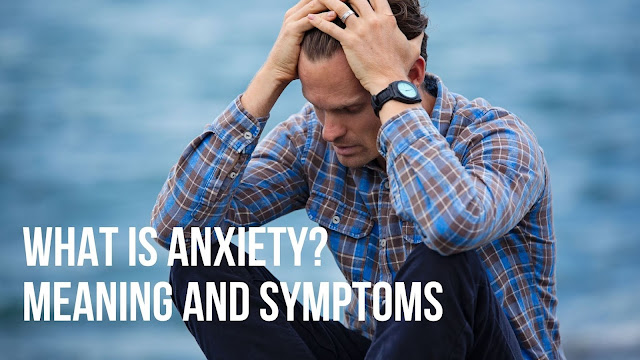
 
What is anxiety? meaning and symptoms


What Is Anxiety?

Anxiety is your body's normal reaction to stress. It can be a feeling of worry, fear, or unease.

Do you feel anxious before a dental visit or starting something new? Have you gotten the jitters before speaking in front of a large group? Do you sometimes get sweaty palms when thinking about the future?


These are common reactions when faced with something that's scary or unfamiliar and it doesn't necessarily mean that anything is wrong.


However, some people suffer from a more severe form of anxiety that causes more serious physical symptoms which can interfere with their daily activities. The feelings of fear and unease are often intense, repeated, and out of proportion to the actual danger. These are called anxiety disorders.


To better understand if your anxious feelings could be a sign of anxiety or panic disorder, let's take a look at some of the symptoms.


What Are The Symptoms of Anxiety Disorders?


1. If you feel your heart is racing and you can't breathe properly, this can be a symptom of anxiety that is severe enough to get professional help.

2. Some people have uncontrollable fears of things like crowded places, driving, or germs that make them completely avoid some places or situations.

3. The consistent inability to concentrate can be a symptom of anxiety. This must be consistent behavior, and not just on those occasions when you lack sleep or are hungry for instance.

4. Nervous behaviors, such as walking around the same area over and over again or twitching your fingers and toes repetitively can be a symptom.

5. A feeling of doom or that something bad will happen to you, such as an accident, heart attack, or even death, can be symptoms of an anxiety disorder or panic disorder.

6. Numbness in your hands, fingers, toes, and legs or feeling like you can't stand are also common symptoms.

7. If you find you have trouble swallowing or unusual dry mouth episodes, these may be indications of anxiety.

8. Fear of people around you and the desire to be alone are feelings that many anxiety sufferers face.

9. The inability to leave your home can be a symptom of severe anxiety or panic disorder.

10. If your normal activities become overwhelming to you, you could be suffering from anxiety or a panic disorder.

The good news is these symptoms and conditions are no longer thought of as being something people shouldn't reveal or talk about. There is help for you if you suffer from anxiety. 

Many mental health clinics and hospitals offer affordable help if you are on a lower or fixed income. Your health insurance may help you get treatment, and they cannot reveal your medical treatment to your employer.

As scientists and the medical world become more informed about these disorders, more medications, and other forms of relief are found to be effective in treating them. Relaxation techniques are very effective and can even be done at home or in the workplace.


Understanding your situation can help you alleviate the stress and fear these panic attacks cause. It will also help you and your healthcare provider find a solution to stopping the attacks altogether. Living in fear of another panic attack will hold you hostage and prevent you from doing the things you love.

If you suffer from some of the symptoms above, seek help from a professional. Get the treatment you need to get you back on the road to peace, health, and happiness. You will be glad


I

Thursday, 14 October 2021

Common Symptoms of Breast Cancer

According to the World Health Organization, breast cancer is the most common cancer among women worldwide.  In this article, you will learn about breast cancer, its common symptoms, and how it is diagnosed and treated.


 Breast cancer is the second leading cause of cancer death after lung cancer in the United States. In Nigeria, more than 100,000 thousand cases are reported every year. In this article, you will learn about breast cancer, its common symptoms, and how it is diagnosed and treated.

COMMON SYMPTOMS OF BREAST CANCER


What is Breast Cancer

Breast cancer is a type of cancer that forms in the breast. This happens when abnormal breast cells begin to grow and divide in an uncontrolled manner creating a tumor or mass of cells. Breast cancer can grow into tissues surrounding the breast. 

There are different kinds of breast cancer depending on which cells in the breast turn into cancer. The breast is made up of three parts. These are the lobules, ducts, and connective tissue. The lobules are the glands that produce milk. The ducts are tubes that carry milk to the nipple. Connective tissue holds everything together. Most breast cancer starts in the ducts or lobules. It can also travel to other parts of the body like the lungs, bones e.t.c. and form new tumors there. This process is called metastasis. 


What Causes Breast Cancer

It is difficult to say what makes a woman develop breast cancer because the causes have not been fully understood. However, there are some risk factors that have been found to increase the possibility of developing cancer. Having a risk factor does not mean that a woman will get breast cancer.

Family history

If you have a family member like a mother, daughter, or sister who has developed breast or ovarian cancer, you may have a higher risk of developing cancer. Genes known as BRCA1 and BRCA2 can increase the risk of developing breast cancer.
 It is possible for these genes to be passed on from parent to child.


Age

The risk of developing breast cancer increases with age. Many breast cancers are diagnosed after the age of 50.


Reproductive history

Starting periods before age 12 and starting menopause after age 55 expose the woman's body longer to hormones which can increase the risk of getting cancer.


Personal history of breast cancer

Women who had breast cancer before are at a higher risk of developing it again.


Previous radiation therapy treatment

Women who had radiation therapy to the chest or breast before the age of 30 are at a higher risk of developing breast cancer later in life.

These risk factors can be reduced with lifestyle modification

  • Drinking alcohol
  • Being overweight after menopause
  • Being physically inactive


Common Symptoms of Breast Cancer

Different people have different symptoms of breast cancer. One of the most common symptoms is a breast lump or thickening of the breast. If you find an unusual lump or thickening of the breast, it is important to consult your healthcare provider immediately for a proper examination.

Read: How to do breast self-examination


Other symptoms of breast cancer include:

  • Pain in the nipple and pulling in(retraction) of the nipple area.
  • Nipple discharge that is not breast milk including blood
  • Pain in any area of the breast
  • Change in shape or size of the breast
  • Dimpling, redness or pitting, or any change in the skin of the breast

Read: How Is Breast Cancer Diagnosed

Wednesday, 11 August 2021

Basic Health Screening Tests for Adults


basic health screening for adults


 Basic health screening tests are tests your healthcare provider recommends to identify any undetected disease or conditions. The goal is to discover diseases that can be easily treated if found on time. Getting screened is one of the most important things you can do for your health.


Health screening  tests are recommended based on  some criteria:


  • The condition has an early stage during which symptoms may not be obvious but early detection and treatment will significantly improve the outcomes.
  • An acceptable treatment is available for the condition.
  • It affects the person's life expectancy and quality of life.
  • A simple and affordable screening test for the condition is available.
  • It is a common public health problem.


Basic Health Screening Tests


Blood Pressure Screening


You can get your blood pressure checked during any routine medical visit. After measuring your blood pressure, your doctor can ask you to check it at home. This is because your blood pressure can change throughout the day. And sometimes, it's high only because you are seeing a doctor. 

To diagnose high blood pressure, your doctor needs to know if is high throughout the day. Your doctor can let you know how often you should check your blood pressure. It may depend on factors such as your blood pressure, your risk for heart disease, if you are 40 and over, and if you are obese.

Please note that any high blood pressure discovered by using an automated blood pressure testing device at home or in a pharmacy may not be accurate. A diagnosis of hypertension should be confirmed by your doctor or a health professional.

Read: What do your blood pressure numbers mean? 


Diabetes Screening


Type 2 Diabetes is a common disease worldwide. However, only about a third of the people affected know they have the condition because often there are no symptoms.  Early screening can help people avoid complications of this disease like damage to the kidneys, heart, and blood vessels.


According to the American Diabetes Association, screening for diabetes should be done at three-year intervals beginning at age 45, especially for people who are overweight or obese.

If there are other risk factors such as a family history of diabetes, high blood pressure, high cholesterol among others, screening should be done at an earlier age and more frequently.


Read: Diabetes, 5 warning signs you shouldn't ignore


Cholesterol/lipid profile


Cholesterol is a substance found in the body. It is used to produce Vit D, some hormones, and cell membranes. Cholesterol is transported in the bloodstream in spherical particles called lipoproteins. The two common lipoproteins are low-density lipoproteins "LDL" or bad cholesterol and high-density.
 lipoprotein "HDL" or good cholesterol. 

Cholesterol screening is done with a blood sample. Studies have shown that people with high cholesterol have a higher risk for cardiovascular disease than others. This risk can be reduced by lowering their cholesterol.


Mammogram


A mammogram is an x-ray picture of the breast. It is used to check for early signs of breast cancer. The American College of Gynaecologists and Obstetricians recommend that women who are 40 and above should have a mammogram every one to two years. 

The  American Cancer Society recommends regular screening from age 45. If you have a personal or family history of breast cancer, your doctor may recommend earlier and more frequent screenings.


Pap Smear 


This is a test used to screen for cervical cancer. The procedure is about collecting cells from your cervix which is the lower end of your uterus on top of your vagina. These cells are then tested to see if they are cancerous or abnormal cells that can lead to cancer.

It is recommended to get a pap smear every three years from the age of 21. The frequency of the pap smear can differ for women with low immunity or a history of cancer/precancerous cells.

Colonoscopy


Colonoscopy screens for colorectal cancer. Most colorectal cancer develops over several years. This cancer usually begins as a non-cancerous polyp on the inner lining of the colon or rectum.

These polyps generally do not cause problems. But, sometimes, they may progress to cancer. When they are discovered during screening and removed, it prevents cancer from developing.

Getting screened can save your life. However, the type of screening and how frequently you do them depends on your risk factors, age, and overall health profile. Be sure to consult your healthcare provider to determine the right tests you need.


Monday, 8 February 2021

Root Canal Vs Extraction: Which Is Better?


Root Canal Vs Tooth Extraction

Your teeth can suffer damage from a number of issues. There could be a hole caused by tooth decay, fracture of part of the tooth due to an injury or weakness of the tooth or it could also be due to an infection of the gum. When this damage affects the part of the tooth called the pulp which is the layer of the tooth containing the nerves and blood vessels, the treatment options will be to consider either tooth extraction or a root canal treatment. In this article, we will discuss the pros and cons of each and when your dentist considers which treatment option.


What is a root canal?

Root canal treatment is a dental procedure carried out to preserve the tooth when the pulp of a tooth is damaged or dead.

What happens during a root canal treatment?

First, a local anesthetic is applied to that area to numb it and prevent pain during the treatment. Then, an opening is created in the tooth to open up the canals containing the damaged pulp. The pulp is removed and the canals are then properly cleaned and disinfected. The canals are filled with a biocompatible material called gutta-percha and then sealed up. 

After the treatment, the tooth is restored by the dentist for proper aesthetics and function. Your dentist may recommend placing a crown on the tooth after the treatment. There is minimal pain after the treatment, although you will be given pain medication to go home with.


What is tooth extraction?

Tooth extraction is a procedure done to remove the diseased or damaged tooth completely from the socket in the bone using dental instruments. There are two types of extractions. It could be a simple extraction or a surgical extraction. 

A simple extraction is done when the tooth can be seen in the mouth. A surgical extraction is carried out when the tooth can not be seen in the mouth because it has broken off below the gum line. It is also performed when the tooth has not erupted in the mouth like the wisdom tooth or third molar.

What happens during a tooth extraction?

An anesthetic is applied to make the area numb. Special instruments are used to loosen the tooth and lift it out of the socket. You may feel some pressure during the procedure. Mild bleeding is expected, so a piece of gauze will be placed over it and you will be asked to bite on it for some time to stop the bleeding. 

If it is a surgical extraction, mild swelling can be expected. However, this can be reduced by applying ice packs over the area. Your dentist will give you a pain relief medication prescription to help with the mild pain after the procedure. You will also be given some instructions to help care for the extraction site and help to heal. You can expect the site to be completely healed after two or three weeks.

 It is important to replace the tooth to prevent the shifting of adjacent teeth. There are options for replacement ranging from partial dentures, bridges to dental implants. Your dentist will explain each option to you and help you choose an appropriate replacement.

Root canal vs tooth extraction

Tooth extraction is done when the teeth are too damaged or diseased to be saved especially if they have been damaged for a long time. 

If the tooth has suffered a fracture well below the gum line, tooth extraction may be considered.

Keeping the tooth is always the best option if possible because a replacement is never really as good as having the original tooth.

So, the final verdict of having a root canal treatment or extraction will be arrived at after discussing with your dentist about your own peculiar case.


True Health Corner. Theme by STS.